
I have watched a lot of dog owners panic at the wrong moment. A dog’s hackles go up, a little barking starts, and suddenly the owner is pulling the leash, apologizing to strangers, and convinced their dog is one bad encounter away from attacking someone. Most of the time, that reaction makes things worse — not because the owner doesn’t care, but because they are misreading what they are actually seeing.
Body language is the only language your dog speaks. Once you start reading it correctly, the whole picture changes. You stop reacting to the wrong signals and start responding to the right ones.
This article breaks down exactly what to look for — hackles, lip licks, barking patterns, posture — and what the most misunderstood of these signals actually mean for your dog’s behavior and training.
What Raised Hackles Actually Mean
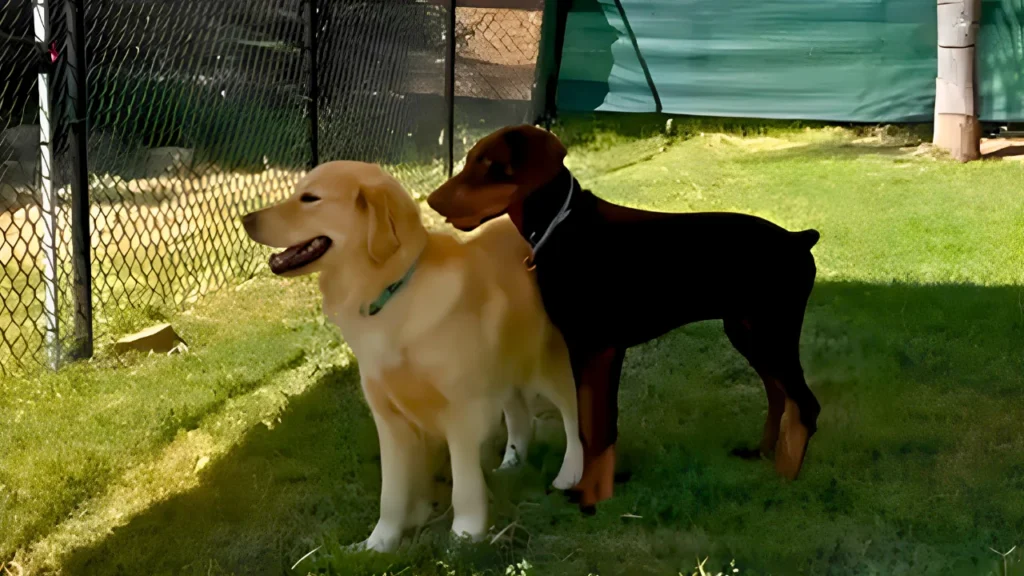
Let’s start here because this one creates the most unnecessary fear.
When the hair along your dog’s back stands up — especially between the shoulders and down toward the tail — most people assume the dog is aggressive and about to attack. That interpretation is almost always wrong.
Raised hackles mean one thing: the dog is stimulated. That is it. The dog has encountered something that activated its nervous system — another dog, a new smell, an unfamiliar sound, a person moving quickly nearby. The body responded by raising the hair. It is an involuntary physical reaction, the same way human skin gets goosebumps.
Now, can a highly stimulated dog get into a fight if another dog runs up to it at that exact moment? Yes, absolutely. High arousal plus an unexpected approach is a combination that can go wrong. But the hackles themselves are not a declaration of intent. They are a read-out of internal state.
The important distinction is what else is happening alongside the raised hackles. That context tells you everything.
The Lip Lick — A Signal People Miss Completely
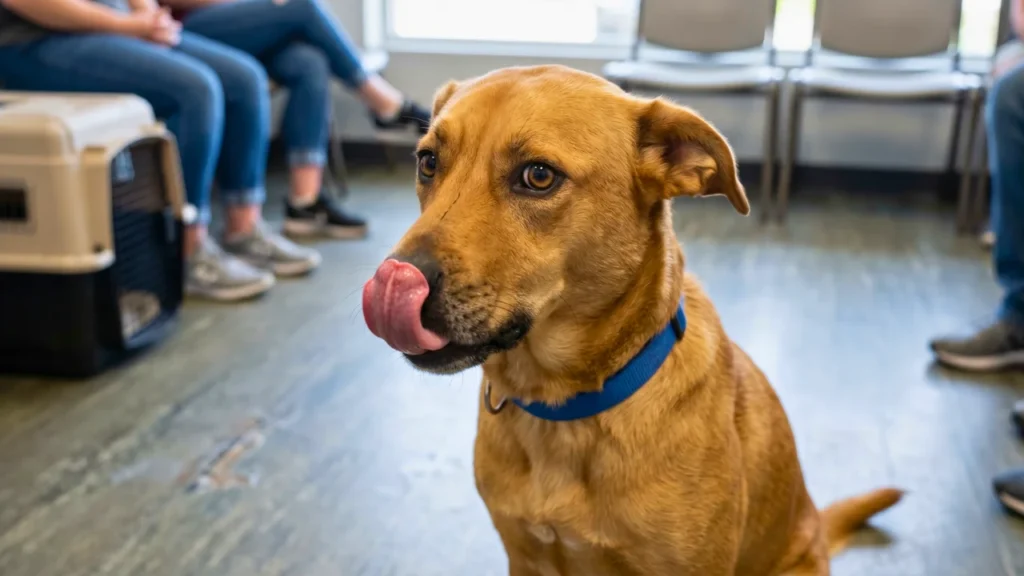
Watch your dog’s mouth during a tense moment. If you see the tongue come out and quickly lick the lips — not a slow, relaxed lick after eating, but a quick, almost nervous flick — that is a calming signal.
It means the dog is communicating, primarily to the other dog, something close to: I do not want conflict here.
Dogs use lip licks to de-escalate. When a dog that has raised hackles also shows a lip lick, those two signals together paint a specific picture — the dog is alert and stimulated, but it is actively trying to avoid a confrontation. That is not an aggressive dog. That is a dog doing exactly what good social dogs do.
Reading the Full Picture: What Serious Looks Like vs. What Anxious Looks Like
Here is where things get genuinely useful for dog owners.
There is a specific barking and movement pattern that looks alarming on the surface but is actually telling you the dog does not want to fight anyone. The head moves erratically. The body backs up even as the barking happens. The bark itself has a frantic, almost hesitant quality — loud but unfocused, like the dog is not fully committed to what it is doing.
Compare that to a dog that is genuinely preparing to be aggressive. That dog moves forward, not back. The head is still and low. The bark, if there is one, is deliberate and controlled. The body weight shifts toward the front legs.
The backing-up bark, the frantic head movement, the half-committed lunging that immediately retreats — these are signs of an anxious, undersocialized dog, not a dangerous one. Once you see that distinction clearly, a lot of the fear around these encounters disappears.
Does that mean you should let strange dogs run up to a dog displaying these signals? No — but not for the reason most people think. The risk is not that your dog will bite the other dog. The risk is that an overwhelming approach will set back the socialization process you are trying to build.
The Real Problem: Under-Socialization Early in Life
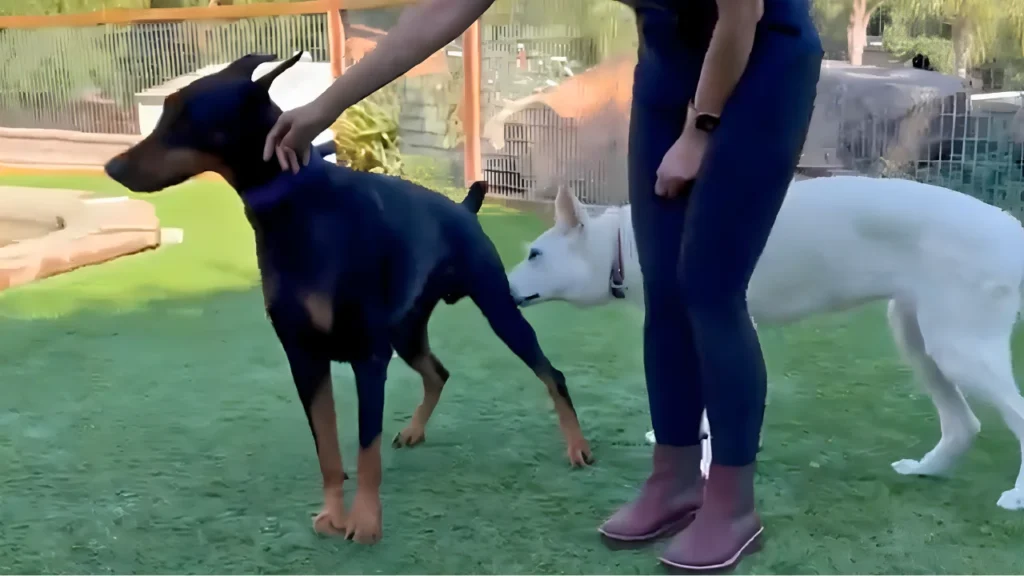
Anxiety around other dogs almost always traces back to the same source. The dog simply did not spend enough time around other dogs during the critical developmental window.
Sometimes this happens because of illness. A puppy that had digestive problems, recurring infections, or other health issues early on often gets kept away from other dogs for good medical reasons — and then the window closes before proper exposure happened. The puppy grows up without learning the basic vocabulary of dog-to-dog interaction.
The result is a dog that is not aggressive, but genuinely does not know how to act around other dogs. Every new dog encounter feels enormous because the dog has no reference points. It has never learned that a wagging tail means play, or that a shoulder bump from a larger dog is not a threat, or that sniffing another dog’s back end is just a greeting.
Desensitization — What It Actually Requires
This is where a lot of well-meaning advice falls apart.
There is a popular recommendation that goes something like this: take your reactive dog to a field, sit twenty feet away from other dogs, give treats whenever a dog passes, and repeat until the anxiety reduces. The logic sounds reasonable. Keep enough distance that the dog stays under threshold, build positive associations, slowly close the gap over time.
The problem is that this method moves too slowly to create real change. Watching other dogs from a distance teaches a dog to watch other dogs from a distance. It does not teach the dog what another dog’s fur smells like, what it feels like when a tail hits you in the face, what it means when a bigger dog puts its chin on your back. Those are physical, tactile, close-range experiences, and no amount of distance training replicates them.
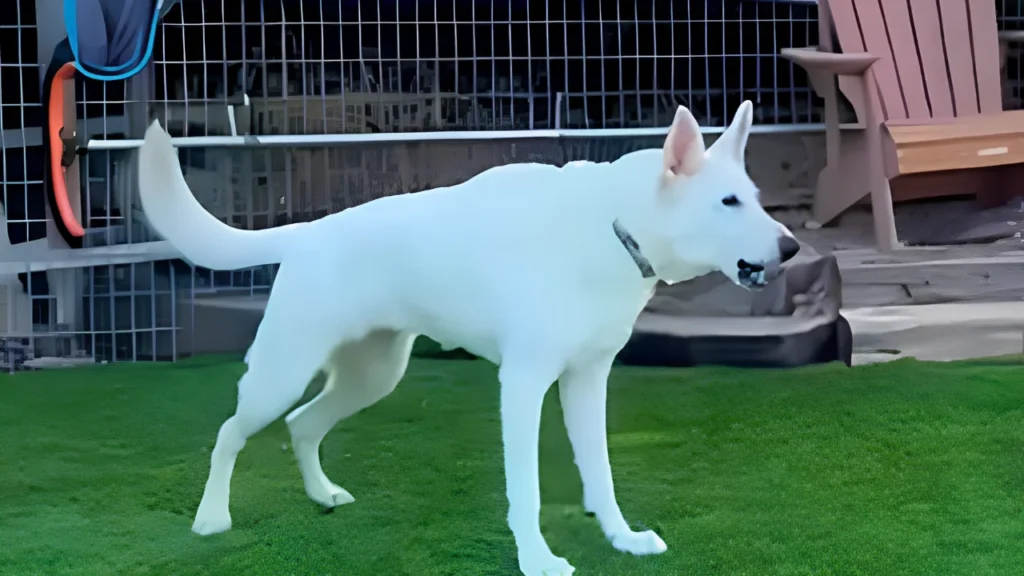
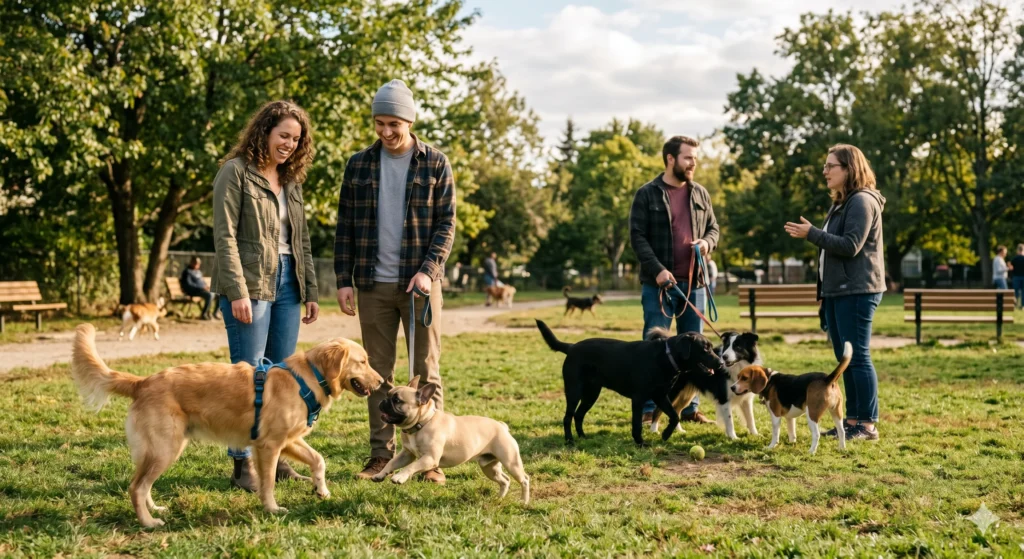
Real desensitization requires actual contact. The dog needs to smell the other dog. Touch the other dog. Be sniffed, bumped, circled, and approached. The nervous system needs real data, not simulated proximity.
The progression looks like this in practice: first the dog smells the air where the other dog has been. Then it approaches close enough to smell the other dog directly. Then there is touching — brief, then longer. Then movement together. Each step is its own adjustment period, and you do not rush to the next one until the dog’s arousal level has come down naturally at the current step.
What you are waiting for is not perfect calm — that comes later. You are waiting for the edge to come off. For the frantic barking to slow down on its own. For the dog to start sniffing more and reacting less. That shift happens on the dog’s timeline, not yours, and trying to accelerate it with corrections or forced closeness usually makes things worse.
The “Mommy and Daddy” Problem
There is a specific dynamic that makes reactive dog cases significantly harder to resolve, and it is completely understandable why it happens.
When a dog is anxious, it checks in with its owners constantly. Looks back at them. Moves toward them when something is overwhelming. Uses them as a home base. This feels like bonding, and in some ways it is — but in a dog training context, it is a problem.
The dog is outsourcing its emotional regulation to the owners. Instead of learning to process the situation independently and find its own equilibrium, the dog is essentially asking its owners to make the scary thing go away. And the owners, because they love the dog, often oblige — by pulling back, by picking the dog up, by leaving the situation.
The solution is counterintuitive but effective: separate the owners during desensitization sessions. Have them stand apart from each other, and ideally away from the dog. This removes the option of leaning on them, which forces the dog to start processing the situation on its own terms.
There is also a secondary technique that works well — have one of the owners go pet the other dog. Calmly, warmly, the way they would pet their own dog. What often happens is the reactive dog watches this, registers that its trusted person is comfortable and affectionate with this other dog, and recalibrates. The other dog goes from threat to something its person actually likes. That shift in perception is real and relatively quick.
It does not fix everything. But it is a useful tool in the toolkit.
What Healthy Confidence Looks Like in a Young Dog
Not every dog in a socialization session is the anxious one. Sometimes there is a young dog in the mix that seems completely unbothered — relaxed around new dogs, curious without being frantic, willing to engage and then just as willing to walk away.
That kind of dog is a valuable teaching tool. Its calm energy communicates something to the reactive dog that no human intervention can replicate. Watching another dog be completely relaxed in a situation that feels terrifying is its own form of information for an anxious dog.
But confidence in a young dog is not always straightforward either.
A four-month-old puppy that stands tall around a much larger dog, shows no interest in play initially, and carries itself with a certain self-assurance — that looks great at first glance. And much of it genuinely is great. Confidence is a good trait in a dog.
The complication is when confidence tips into something else. Young dogs — especially large-breed puppies who will grow into significant size — sometimes develop a particular behavior pattern that looks like confident play but is actually early-stage pushiness. An over-the-top shoulder bump. A body slam that is slightly too hard for the context. A move that says, without subtlety, I run things here.
At four months, another dog getting annoyed by this and responding with a firm correction is actually a gift to that puppy. The correction from a well-balanced older dog carries weight that nothing a human trainer does can fully replicate. The puppy files that information away. It learns that confidence is fine, but that particular kind of pushiness has consequences.
Left unaddressed, that same shoulder bump from a ninety-pound adult dog gets a very different response — and not a forgiving one. The time to shape it is early, and sometimes the best teacher is simply another dog.
The Practical Takeaway for Your Own Dog
If your dog is reactive around other dogs, here is what the evidence actually supports:
Get your dog with other dogs. Not near them, not within sight of them from a safe distance — with them. Find a neighbor’s calm dog. A friend’s lab. One well-socialized dog in a controlled setting is worth more than a hundred treat-and-distance repetitions in a field.
Let the process take the time it takes. The first session will probably look messy. There will be barking, backing up, frantic head movements. That is not failure — that is the starting point. Stay in the situation (at a pace appropriate to the dog’s stress level) and wait for the edge to come off. It will.
Watch for the real signals. Hackles plus lip lick plus backing up is a very different picture from hackles plus forward movement plus still, focused stare. Learn the difference and you will stop pulling your dog away from situations it was actually managing fine.
Remove yourself from the equation when it helps. If your dog uses you as an emotional crutch in stressful situations, practice not being available for that role during training sessions. It is not unkind — it is the thing that actually helps the dog learn to cope.
Let other dogs do some of the teaching. A well-balanced dog communicating clearly to your dog is more efficient than almost anything else. The information lands differently coming from another dog.
Final Thoughts
Reading dog body language is not complicated once you know what to look for. The problem is that most of the signals people notice — raised hackles, barking, stiff posture — get interpreted as danger when they are usually just information.
Your dog is telling you something in every interaction. The goal is to get good enough at the language that you can hear what it is actually saying, rather than reacting to how it looks on the surface.
Once that shift happens, training becomes less about controlling your dog and more about understanding it. And that changes everything.